How Daytime Activities Support Better Sleep in Babies and Young Children
Real examples from over 15 years of Early Childhood Education experience.
Published June 2026
By Hermes Lu
Introduction
Before becoming a Certified Infant & Child Sleep Consultant, I spent more than 15 years in the Early Childhood sector in Singapore, working with babies and young children across infant care, childcare and kindergarten settings. One thing I observed repeatedly throughout those years is that sleep and daytime experiences are closely interconnected.
Babies and young children are intrinsically motivated to learn. As they develop new skills, they naturally seek opportunities to practise them repeatedly. Parents sometimes start to struggle when they observe their child practising these skills such as rolling, standing, climbing and speaking in the crib when they are supposed to be sleeping. Babies might stand in the crib, then cry because they do not yet know how to lie back down.
Understanding what children are developmentally driven to learn can help us support both their learning and their sleep more effectively. Meaningful opportunities for physical, cognitive and sensory engagement help to build healthy sleep pressure, while also reducing the need for children to seek stimulation elsewhere at less appropriate times.
My approach to infant and child sleep consulting is heavily informed by my background in child development and Early Childhood Education. In this article, I would like to share some real examples of activities that I have done with infants as young as two months old through to older preschool-aged children over the course of my Early Childhood career, as well as some of the valuable developmental concepts behind them.
Real Examples of Daytime Activities That Support Development and Sleep
*All images are real and have been anonymised to protect privacy
Learning Through Throwing and Cause-and-Effect
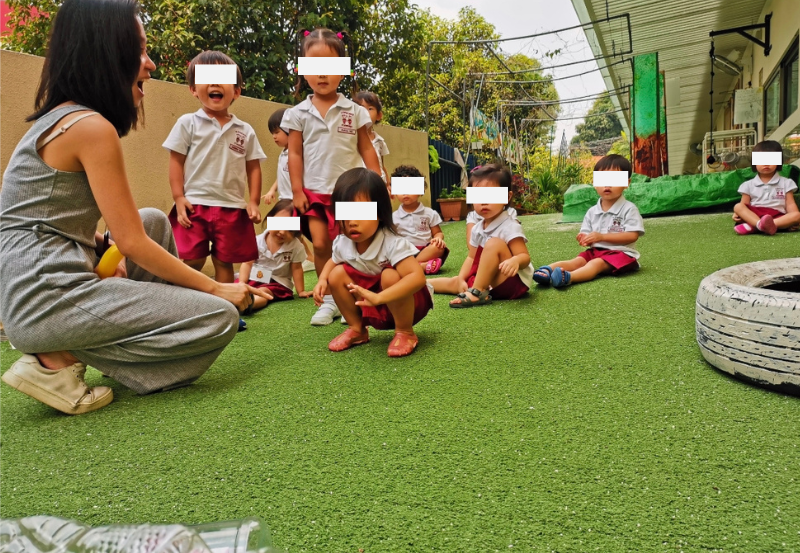
When a baby discovers throwing, they want to do it over and over. This is a good thing because it shows that they are cognitively ready and motivated to learn about the cause and effect surrounding it. However, this might also result in them trying to throw objects that might break or to throw things out of their crib when they are supposed to be sleeping.
Whenever I would be with the toddlers (12 months to three years), I would make time for simple activities like bringing them to a low slope at the back of our school and allow them to choose several items from our classroom to roll it down and see what happens. This satisfies their mental curiosity while giving them a safe outlet to do it within boundaries.
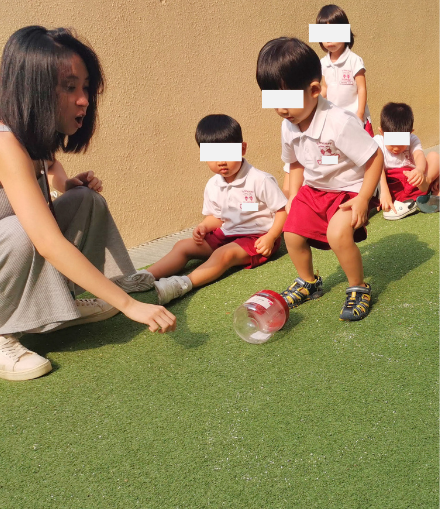
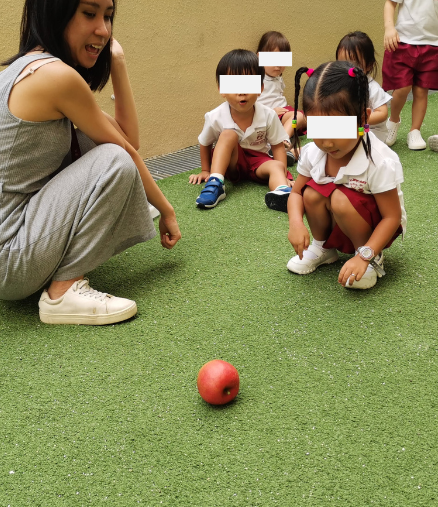
When I say I would let them choose items, I give them choices between objects. This helps me avoid situations where they might choose something dangerous or breakable which might result in a struggle if I were to say “no” at that point.
I would usually offer them several safe choices such as “Do you want to try the tissue box or the plastic bottle?” this helps them feel that they have control in directing the activity while ensuring safety. Younger toddlers who haven’t started speaking can point to choose between two choices while older toddlers can use words to choose between more choices.
Sometimes, I would also phrase it as, “Let’s take something out to the back of the school today, we can choose something from the shelf, maybe the toy apple or the little container? You can decide, which do you think we should take along?” Phrasing it with an emphasis on trusting them to decide reinforces their confidence as growing individuals wonderfully.
Developmentally, it is normal for toddlers to consistently find ways to exercise their growing independence. At this stage, I would always recommend for adults to identify and differentiate non-negotiable boundaries which we should not offer toddlers choice in as it might bring danger or compromise on their well-being, with spaces where we can offer them choice and opportunities for independence in order to encourage this developmental drive for autonomy in a healthy manner.
This approach is useful in other similar situations such as with toddler bedtime resistance driven by wanting to have a sense of control. For example, we do not let toddlers decide what time they should be sleeping or waking as that can compromise their best interests in health, but we can give them choices to decide which bedsheets they would like to use, what pyjamas they would like to wear, which story they would like to read before bed and so on. If you have a fun toddler alarm clock, allowing them to set it before bed every night can also become something they look forward to that helps them feel independent and in control of their own bedtime routines.
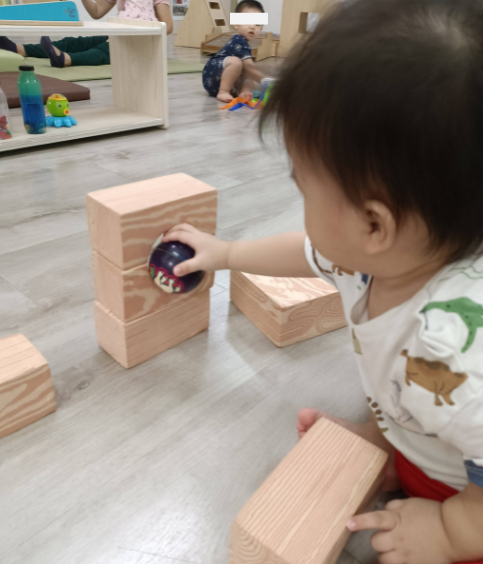
For older infants (below 12 months) who have just discovered throwing, their motivations are a little more direct than toddlers. They’ve just discovered that when they hold something and let go, something happens to that object and so they want to do it over and over to understand it.
Creating simple set ups where they can put balls and toys through slots and holes might interest them at this stage, whereas toddlers can be engaged in set ups with more variations like aiming into a basket or experimenting with sloped surfaces. When they may be throwing in areas that are inappropriate, re-direct them to the designated set up.
Object Permanence and Separation
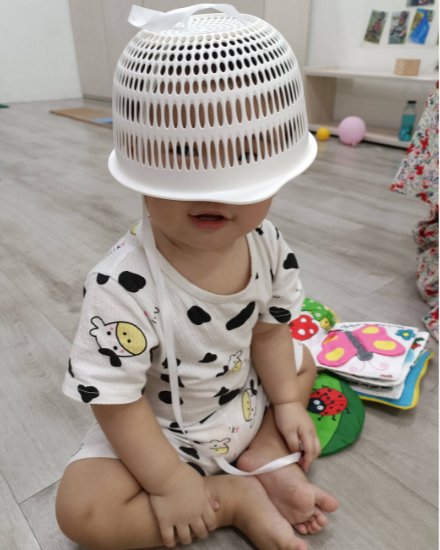
At around 6-9 months of age, infants also start to develop object permanence, meaning they start to understand that a person or object still exists even if they can't see it. They might also start to develop some stranger anxiety or separation anxiety as they begin to differentiate familiarity in people.
Some babies might cry at this stage if they are put to sleep by less familiar people or if they know their main caregiver is around but not directly with them. Playing peekaboo games and object permanence activities such as hiding toys then finding them again help a lot.
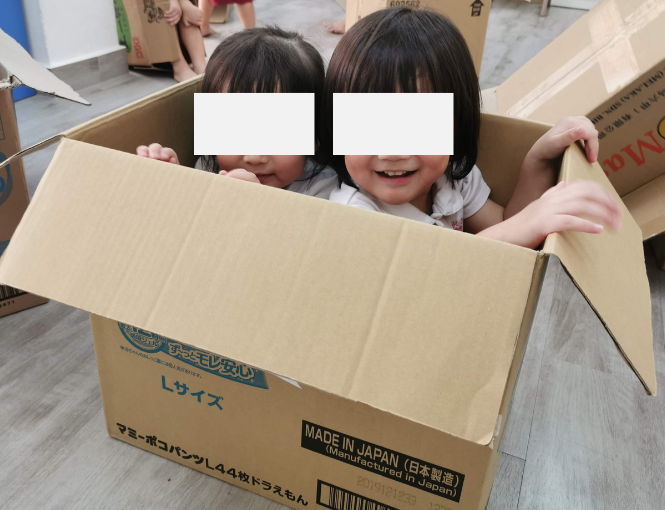
At this stage, I like to provide them with things like little child-sized plastic drawers that they can open and close to hide things in, or to cut holes in boxes for them to slot things in then open it to find them again. These are actually also great ways for children to explore shape and size as they learn which objects fit and which don’t.
Play lots of simple hide-and-seek games with your baby by hiding behind objects, curtains, doors, and make it really positive and fun when they find you. This helps them gradually understand that when you leave, you will also come back. It helps them associate your return with happy and positive feelings.
Daylight Exposure for Newborns and Young Babies

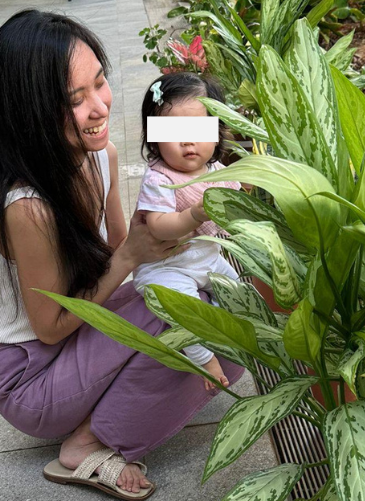
For the younger babies including newborns, I really enjoyed taking them out for walks regularly in the day to expose them to different sights, sounds and smells because it becomes a new experience for them each time.
In the first few weeks of life, newborns mostly see black, white and shades of grey. By 2-3 months old, they start to be able to see bolder colours, larger shapes and show signs of tracking objects. Their other senses continue to develop rapidly as well.
They can be in the exact same garden on two separate days but experience it completely differently.
Exposing babies especially newborns to daylight in the day also helps to regulate their circadian rhythm, which can improve sleep challenges associated with day-night confusion.
Exploring Through Movement

Of course, lots of tummy time is a must for all babies. The Singapore Integrated 24-hour Activity Guidelines for Early Childhood explains how tummy time has positive effects on infants’ global development and is a useful resource to reference when planning daily schedules and routines for babies and children under the age of seven.
In the course of development, it is common for babies to flip then not know how to flip back yet, or to stand but not know how to lie back down, sometimes they do this in the crib when they are supposed to be sleeping.
Give them lots of practice, use toys that they are interested in to encourage them to reach and stretch, interact with them and guide them as they try to figure their own bodies out. Provide lots of low surfaces and bars to practice when they start standing.
At that point, I would also play lots of position games and movement songs that encourage them to go from standing to sitting to lying down, (“Touch the sky”, “lie down low”), go back standing again and so on. This helps them figure out how to go from one position to another
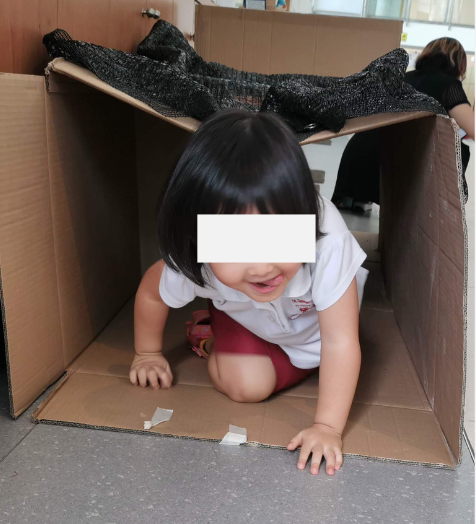
For babies who are already crawling, providing child-safe tunnels, cushions, boxes and safe spaces to climb through or over also gives them opportunities to further practice coordinating their movements.
If they climb onto the sofa or bed, guide them as you gently turn their bodies around and teach them how to climb back down feet first.
With repeated practice, they will gradually learn how to get down more safely on their own.
Real Tools and Risk Assessment
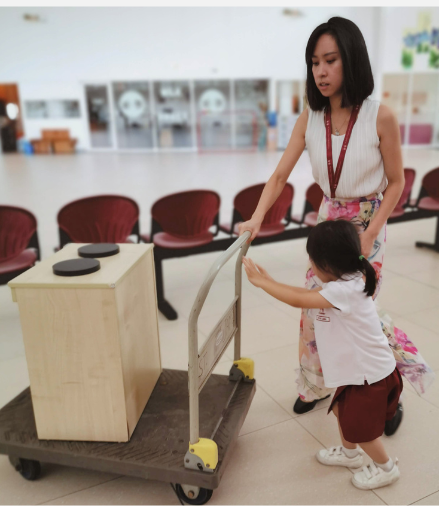
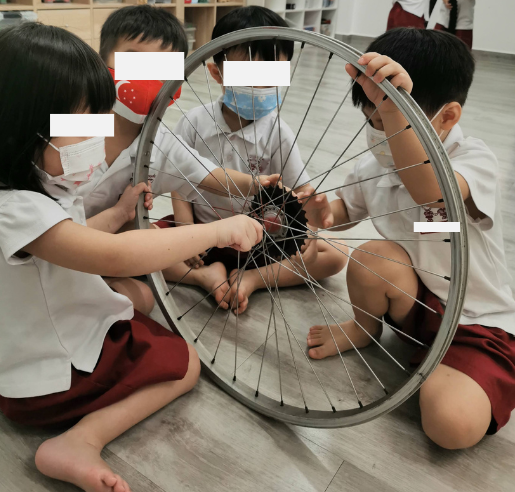
At around 2-3 years old is when I would start introducing selected real tools to the children. I absolutely loved doing this.
At this stage, children are naturally drawn to investigating how things work in their immediate environment, as well as have the growing capabilities to handle real objects over toys.
I’d take them along with me to collect old furniture or unused objects that we’d see around, clean them and take them back to our classroom. I would then encourage them to give ideas on how we could repurpose them and work on it together.
Teaching children how to handle real tools is a great way for them to practice and master developing skills, as well as to build an awareness of how to handle risk in their environment.
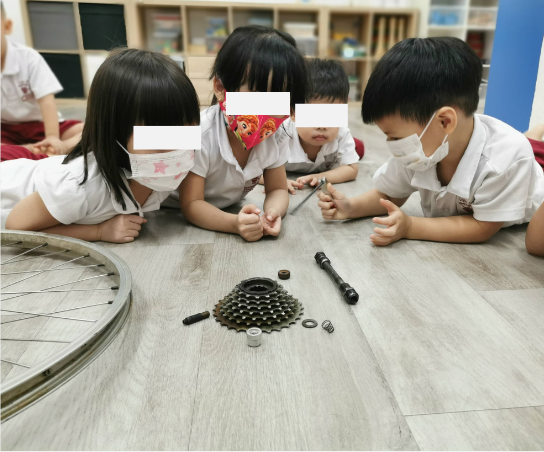
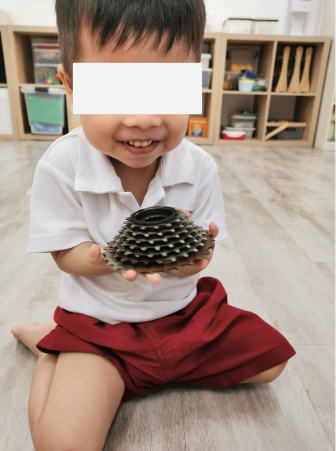
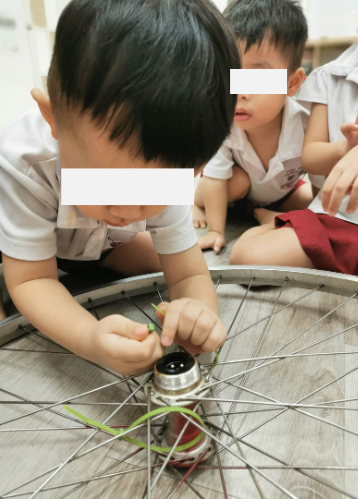
For example, in these pictures, we took apart an old bicycle wheel. The children had lots of fun crawling through the tyre, spinning the wheel rim around and getting acquainted with the size, shape and weight of the various other parts.
As a rule of thumb for safety, I would always remove any pieces that could easily cut or pierce skin, or had any rust, so that the children can explore the other pieces freely.
In the second picture, one of the children got really interested in the bicycle cassette. He had described it as “hard” and “heavy”. I would respond with “yes, its hard and heavy”, guide his hands to the bottom of the cassette and say, “hold it with two hands”, "walk slow".
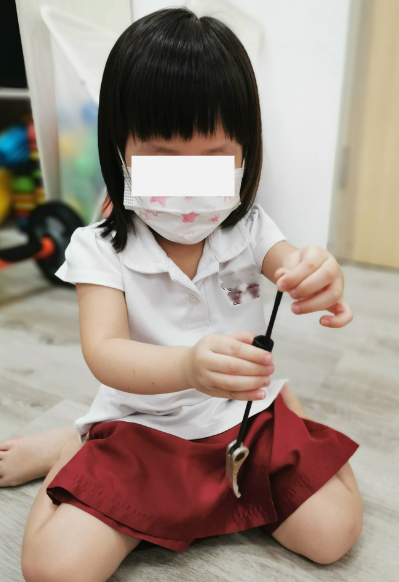
Over time, I noticed that the children got a lot more intuitive about how to manage sharp edges, heavy items, pointed objects, and other potential risks around them. They’d also be able to recognize objects that they are able to handle themselves and objects that they should be asking me for assistance to handle.
In the course of repurposing the items that we take apart, I would also teach the children lots of skills such as using cable ties, inserting batteries, nuts and bolts, and so on.
They’d learn which tools were most appropriate to help them achieve the results that they wanted.
Of course, the children should also be only allowed to explore real materials and tools that do not have a risk of causing grievous injuries and were always under my close watch or supervision.
In the first picture, you can see that the child is able to handle cable ties independently, this is because it requires a three-step sequence of a single action skill (hold both ends with separate hands, put one end through the hole, pull out that end), which is achievable for them at this age. I would teach them step by step.
They could focus on this for a good 10-15 minutes at a time, determined to achieve the task by themselves. This is exactly the type of task that satisfies them well physically and mentally, it’s like scratching their brain in the right spot.
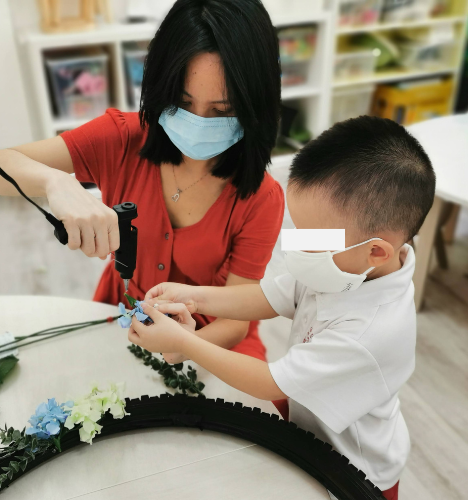
In the second picture, using a hot glue gun requires a more advanced coordination of skills which they are not ready for independently at this age (requires both hands to coordinate different actions at the same time), I would then bridge that gap with adult guidance while still involving them.
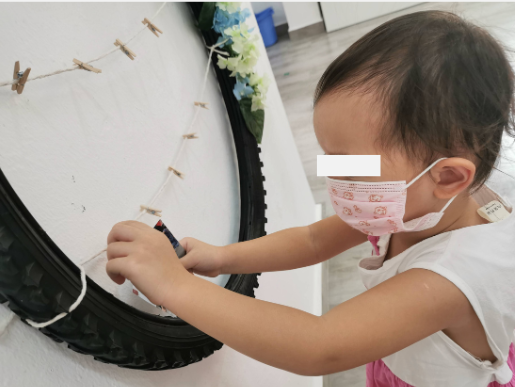
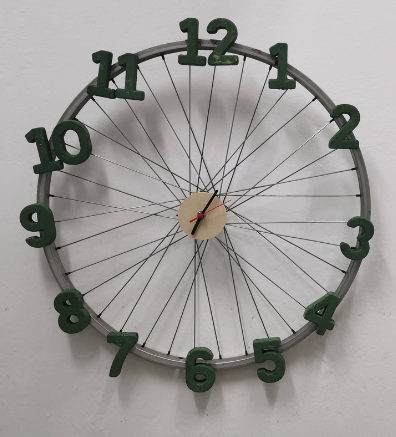
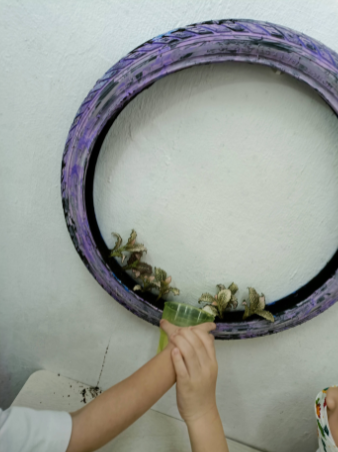
We eventually repurposed the bicycle wheel rim into a fully functional classroom clock, the tyre into a classroom photo frame where the children could peg their own polaroids, and another tyre that we found one another day into a hanging plant pot for some tiny plants. The children would take turns to water the plants and care for them.
Seeing their efforts come to life is very rewarding for the children and reinforces the value of handling tools carefully, following safety boundaries and persevering through challenges.
In my years in the Early Childhood Sector, I’ve learnt that when we believe that our children are capable, and act according to that belief by giving them many opportunities to learn new skills, and we trust them with those opportunities, they truly thrive.
I would also like to add that as an Educator, I was well attuned of where each of the children were at individually in terms of the skills they were proficient in, the skills they would benefit from more practice for, as well as their abilities in focus, direction and control. I would vary the amount of adult guidance that each child needed while giving room for them to figure things out and learn on their own. I would assess if they were ready for tasks independently before taking a step back to encourage them to achieve new milestones by themselves.
Sometimes I would conduct parts of an activity in a large group and if I felt that the children could use more individual support, I would break them up into smaller groups where I could give each child more attention. Sometimes the children benefit from peer guidance as well and I would intentionally pair them up to teach each other.
As much as I am giving broad age ranges in this article, it is important to remember that no two children are completely the same developmentally and to vary our approach accordingly.
As adults, it is also important that we seek to set our children up for success as we plan their activities for the day. For example, I knew approximately how long the children could sit down and pay attention to instructions in a large group and so in planning the amount of free play, independent activities, group activities as well as the sequence of the day and the daytime activities, I would always ensure that my expectations of the children were achievable for them.
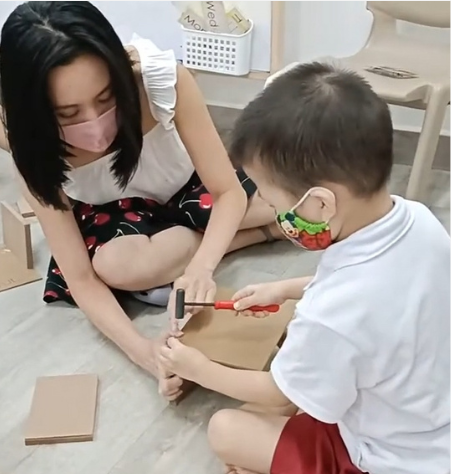
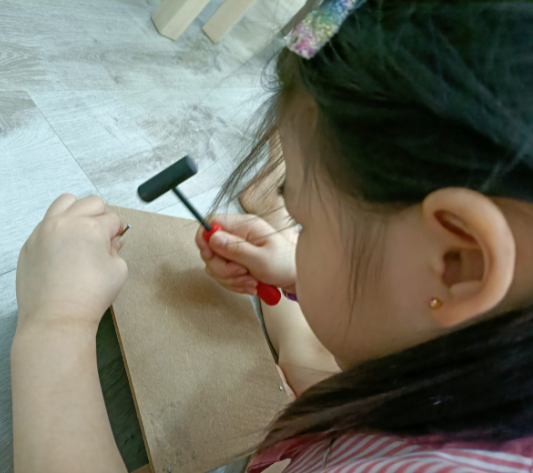
At around 4-5 years of age, I would start to introduce lightweight and child-sized hammers, larger nails and smaller planks of wood for the children to learn how to put things together through hammering nails.
At this age, they are better able to coordinate different tasks with both hands at the same time (holding the nail in place with one hand and aiming the hammer with another without losing focus on either).
They would learn a lot about physics concepts in the process, telling me that when they hit too hard or place the nail too far to the side, the wood cracks so they have to use just the right amount of strength and place the nail in the middle. They would often come to these conclusions by themselves.
The benefits of allowing children to explore real materials, assess risk and develop practical skills are well-researched and supported by a number of educational approaches including Montessori education and Anji Play. These approaches recognise that children often learn best through meaningful, hands-on experiences that involve appropriate levels of challenge and risk. A great resource for reading that I would recommend is The Anji Play Ecology of Early Learning, that does a deep dive into the valuable child development concepts behind this approach as well as the documented results of it.
Self-Help Skills and Independence
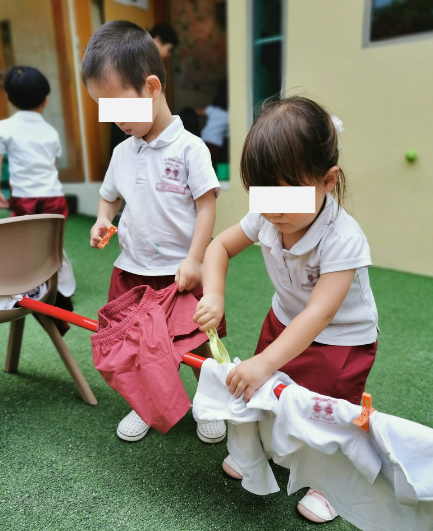
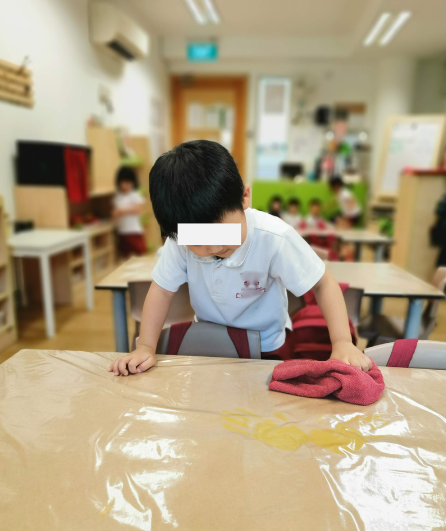
Other than using real tools, learning self-help skills is another very effective way to help children gain confidence, self-regulate better and engage them well physically and mentally in the daytime.
It is also another aspect of development where we can easily make accommodations to the task according to the child’s developmental level. For example, I’d encourage younger toddlers to put their own water bottles into their bags and teach them how to zip it up. They can learn to put their feet in their shoes and to press down on the velcro straps after it has been adjusted for them. As they develop more controlled fine motor skills, we can then teach them to pull and adjust the straps themselves.
Self-help skills might seem like a mundane thing, but I have experienced firsthand how crucial these skills were in building a healthy sense of self in our children. The more proficient the children in my class were at caring for themselves, the more calm and assured they were through the day.
It is also common for older babies and toddlers to start showing an interest in housework. They want to watch adults mop, vacuum, do laundry, and often imitate us. It is a great time to teach them these life skills while they are particularly interested in it. We can either provide them with smaller and lighter child-sized brooms, mops, cooking utensils, or break down steps in using the actual adult-sized tools in a manner that is safe and appropriate for them with supervision.
By 2-3 years old, I’d involve them a lot more in classroom care like wiping the tables, pushing in the chairs and so on.
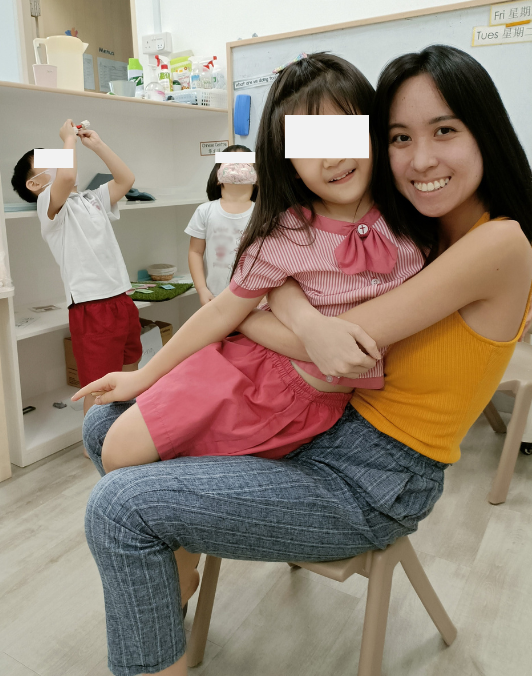
By 4-5 years old, I’d have digital or polaroid cameras in my classroom and often got the children to help me take pictures of our classroom activities.
I’d use the pictures for documentations to show their parents what we do in class, and it really gives them a confidence boost to tell their parents that they took the photos themselves too.
The above photo is one of my favourites for memories, taken by one of the children in my class at the time.
Final Thoughts
It was very lovely being able to revisit some of these favourite memories from my years in the Early Childhood Sector and I truly hope that this article has provided some useful insights.
The activities featured in this article may be particularly helpful when sleep challenges are influenced by a child's need for more appropriate physical, cognitive or sensory engagement during the day.
However, if your child is experiencing other specific sleep challenges such as being unable to transit sleep cycles, it is important to address the root cause of those sleep difficulties in order to see more significant improvements to their sleep.
You may read more about transiting sleep cycles in a more elaborate article that I have written on the topic here.
Every child develops differently, and sleep challenges often have multiple contributing factors. If you would like personalised guidance that takes your child's development, temperament and home environment into account, you may learn more about my in-home, in-person sleep consultation services here.
Further Reading and References:
Child Development and Daytime Activities
Infant Sleep
McGraw, K. et al. (1999). The development of circadian rhythms in a human infant
Hermes Lu. (2026). Baby sleep cycles: One common reason babies wake frequently at night
Circadian rhythm, sleep pressure and infant development - Hermes Lu (coming soon)
Written By:
Hermes Lu
ECDA-Registered Early Childhood Professional in Singapore
Certified Infant and Child Sleep Consultant
Hermes Lu has 17 years of experience working with infants, children and families in Singapore. She holds a Bachelor’s Degree in Early Childhood Education, ECDA-recognised qualifications for the teaching and care of infants from 2 months of age to 6 years, and is a Certified Infant & Child Sleep Consultant and Newborn Sleep Specialist through IPSP.